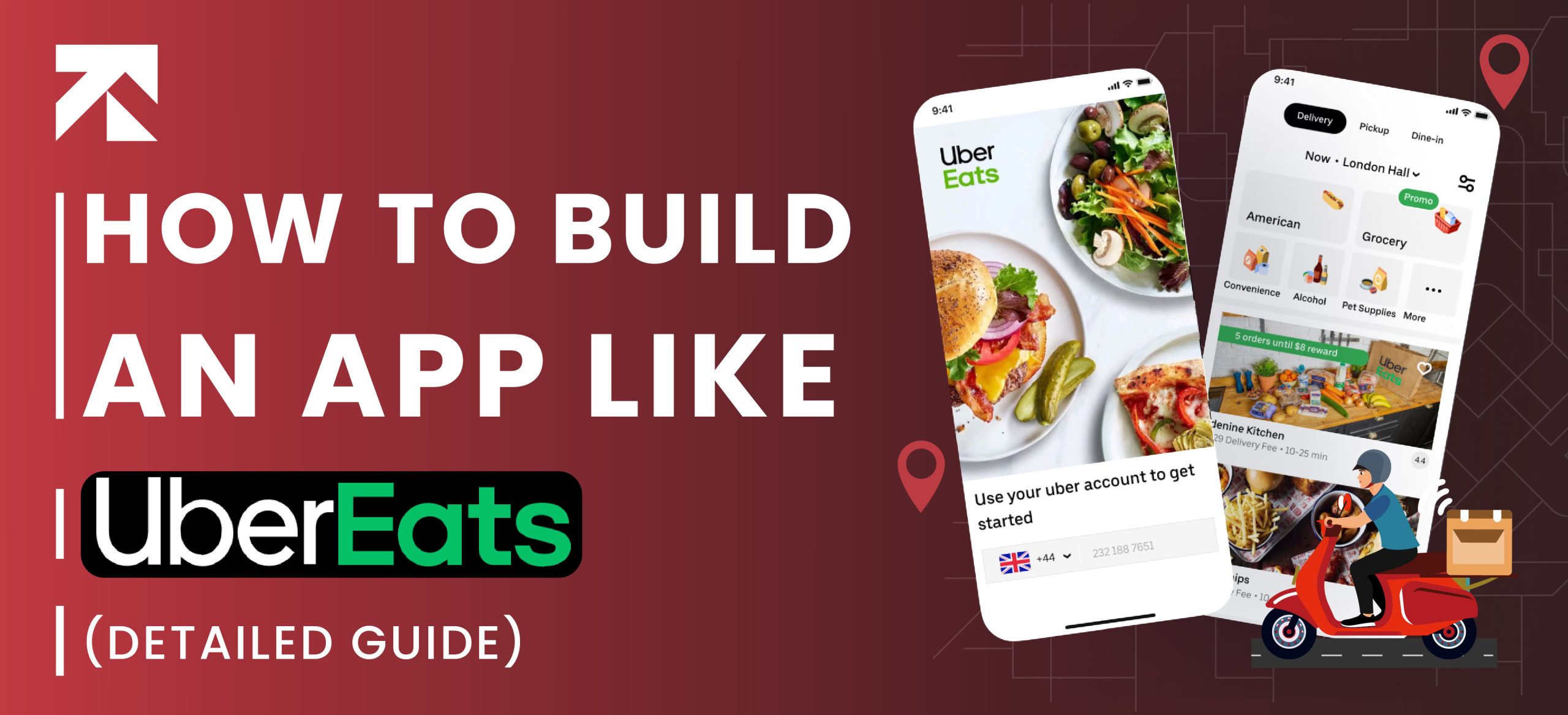
While the global food delivery market rushes toward $500 billion, it is fueling a massive race among entrepreneurs to launch the next Uber Eats. With changing lifestyles, people increasingly prefer convenience over cooking, and food delivery apps have turned into an everyday necessity.
Platforms like Uber Eats have proven incredibly profitable and have redefined convenience. However, building something similar requires careful planning, the right tech stack, and a deep understanding of user behavior. If you are considering building your own app like Uber Eats, try our food delivery app development services to make the most of it.
In fact, success here merely depends on creating a frictionless experience where restaurants, customers, and couriers operate as one synchronized unit. In this write-up, I will walk you through the complete process of online food ordering app development. You will learn challenges down the road, similar apps in the market, and best practices to follow.
Table Of Contents
How Uber Eats Business Model Works?
Prior to development, you should be aware of how apps like Uber Eats operate. At its core, the model includes three key players: Customers, Restaurants & Delivery.
Users come first. They want your app to provide easy-to-browse menus, order placement, and accurate deliveries. This is why everything in Uber Eats, from app design to delivery speed, is optimized for maximum convenience. Customers actually define the success of the platform.
Restaurants act as key partners, utilizing the platform to scale sales beyond physical boundaries. The app provides the delivery infrastructure, creating a ‘win-win’ in which restaurants increase revenue, and the platform earns a commission on each transaction.
Delivery partners, as the third and final component, are the backbone of food delivery apps like Uber Eats. They pick orders from restaurants and deliver them to customers in a timely manner. With smart algorithms, the platform assigns orders efficiently, ensuring minimal wait times and optimized routes.
Similarly, when it comes to the platform itself, they earn through multiple channels. Customers pay them back in terms of delivery fees that vary with distance, demand, or time. Following that, they charge the restaurant a commission on every order.
If you are up to creating an app similar to Uber Eats, balancing all three stakeholders efficiently is paramount. When implemented properly, this model fosters a mutually beneficial network.
How to Build an App Like Uber Eats?
We all have been there: it’s 8:00 PM on a Tuesday, the fridge is empty, and the thought of cooking feels like a test of endurance. With just a few clicks, a hot meal is at the door twenty minutes later.
This looks like an amazing experience, but the machinery behind an app like Uber Eats is incredibly complex. You have to deal with all hungry customers, busy restaurant kitchens, and a fleet of couriers at the same time. To help you do it better, we have shared an end-to-end food delivery app development process:
Step 1: Conduct Market Research
Don’t start coding right away; first, understand why you are creating a food delivery app like Uber Eats. The food delivery space is bursting at the seams, so a simple app just won’t cut it. You need a more robust, innovative solution to outshine all other competitors.
For that purpose, the best practice is to start with in-depth research on target users and existing bigwigs. See what paramount things they have overlooked and where you can do better. Then apply such insights to set a Unique Value Proposition. Your priority is to locate a critical, unmet need within the market.
First, create a list of the core features your app can’t function without. It includes all necessary features for customers, restaurants, and drivers. Those who start small easily test the idea in the real world and iterate without overcommitting resources.
Step 3: Design Intuitive UI/UX
Your app interface is your storefront; it’s the first impression of your brand. In fact, a well-designed interface will grow your conversion rates by up to 400%. While the app is confusing or cluttered, persuade users to switch to competitors in seconds.
Your UI/UX design should be easy to navigate, and users shouldn’t have to think much about how to use it. To further enhance its use, enticing imagery, clear calls to action, and a hassle-free checkout are required.
Step 4: Core Development
To build a robust food delivery app like Uber Eats, adopt a full-stack approach where frontend, backend, and data layers are tightly orchestrated. When such layers work in harmony, your app becomes fast, reliable, and ready to scale.
Frontend: The frontend is what the user touches. No matter if you are working on iOS, Android, or a web portal, it must be responsive and snappy.
Backend: The backend is the brain of your app. It handles the heavy logic and manages your databases. For instance, when a user clicks “order,” the right restaurant receives a notification instantly.
API Integrations: Don’t reinvent the wheel. Use specialized APIs for critical tasks like Google Maps for tracking, Stripe or PayPal for payments, and Twilio for SMS notifications.
Step 5: Quality Testing
Looks don’t matter if it doesn’t work. You need to put it through the wringer. Run functional tests to squash bugs, performance tests to see how it handles a surge in traffic, and usability tests with real people to ensure the flow makes sense. Treat testing as proactive quality assurance, not a reactive last-minute scramble.
Step 6: Final Deployment
Now that everything is done and dusted, you need to get it into the hands of the user. Start local to build a dense network of restaurants and drivers. If required, run an aggressive marketing campaign, but make sure it is personalized. Use social media to promote local restaurants, provide users with a welcome voucher to attract them, and run a referral program to spread the word.
Must-Have Features for Your Food Delivery App
The true hurdle in food delivery app development lies in integrating the disparate needs of customers, restaurant partners, and delivery drivers into one fluid, high-performance system. In fact, your app will only be a viable option if it easily lets hungry users find food, efficiently connects restaurants to process orders, and similarly connects riders to deliver in a timely manner.
This is why you don’t overload your app with features that can complicate the experience. Focus on usability, speed, and real-world functionality. Every single feature you add should feel intuitive, responsive, and purpose-driven.
Customer App
Restaurant Panel
Delivery App
OTP login
Business verification
Document verification
Smart search
Order status
Delivery requests
Profile management
pricing control
Availability (Online/Offline) toggle
Real-time GPS
Preparation updates
GPS route optimization
Secure digital wallets
Earning reports
Payouts dashboard
In-app chat
Kitchen notifications
Chat with customer/vendor
Loyalty programs
Feedback management
Performance metrics
Challenges to Consider While Building a Food Delivery App like Uber Eats
Building your own food delivery app, like Uber Eats or DoorDash, may look easy, but it involves a fair share of challenges. What looks simple on the surface often involves dozens of moving parts operating at the same time.
Everything from logistics management to rider assignment adds another layer of complexity to be managed through careful planning and execution. Here, I will discuss critical challenges we experience while creating an app like Uber Eats:
Dynamic Logistics Control
Your most challenging task here will be synchronizing moving parts instantaneously. The food delivery app you will be creating, like Uber Eats, should connect customers, restaurants, & riders. Let’s assume that if an order is placed, the app should notify the restaurant to prepare, assign it to a nearby rider, and allow the user to track it live. Even a minor lag will disrupt the entire experience.
Express Delivery
Delivering warm and fresh food without any delay shall be your priority. In that case, you need efficient route optimization, proper rider allocation, and accurate delivery estimates. Failure to deliver a fast and reliable app experience results in prompt user abandonment.
Managing Payment Systems
Your customer needs flexibility when it comes to payments; some may want to use a digital wallet, debit card, or maybe cash. All you need to do is ensure that this journey is effortless and less complex. On top of that, ensure that whatever payment method they choose to proceed with, it shall be safe and secure.
Accurate Order Tracking
Let your customer track active order status; in fact, this is the most standard feature one must take care of. It’s hard for a hungry customer to wait a long time; being in the know with the status brings a kind of satisfaction. In that case, the app might need GPS integration, updates, and synchronization between all stakeholders.
Partnering with Restaurants Efficiently
Each restaurant on your app will require time-to-time menu updates for order status and inventory level. A less efficient app can lead you to incorrect orders, delays, and poor customer satisfaction. This is the most important thing to take care of; it will make or break your good delivery app success.
Managing Delivery Workforce
To be real, the hardworking riders will be the backbone of your app. In order to assign them the right order and ensure availability, you need a well-organized system. Also, never ever overlook rider safety, incentives, and fair workload distribution.
Handling Customer Support
Despite working with a high-performing system, logistics and technical glitches are likely to happen. There should be a round-the-clock customer support system to resolve complaints swiftly. This is because a lack of support damages your brand reputation faster than any technical issue.
Cost to Build a Food-Delivery App Like Uber Eats
You should expect anywhere between $30,000 to $90,000 to build your own food delivery app like Uber Eats. The actual number here may vary with factors like app complexity, integrations, and development location. Here is how much you should expect based on the specific app type:
App Complexity: The more features you add, the higher the development cost will be. For instance, a simple app is easy to code. At the same time, a feature-rich platform requires extra time and resources, making it a bit pricey.
Platform Choice: Building for iOS, Android, or both will affect your budget. But separate native apps are a way more pricier in contrast to cross-platform technologies. You might have to pay 40% less.
UI/UX Design: Though custom designs and animations are paramount to retain large numbers of users. However, they can directly push your development budget forward.
Third-Party Integrations: Payment gateways, GPS tracking, and notification services are added in the form of integrations. It ultimately seeks to give you both extra development time and cost.
Team Location: Hiring developers in regions like North America or Europe is a bit expensive. In comparison, working individuals in South Asia are budget-friendly. You can reduce it almost by half through outsourcing.
Remember that you can even start with just $15,000 by building an MVP and later scale it to an advanced platform. It will be your smart move to start with. Just focus on essential features, do feasibility analysis, and then expand it as required.
Is Building an App Like Uber Eats Worth It?
The math here paints a promising picture, but the honest answer leans strongly toward yes only when you do it right. According to Industry reports, the global food delivery market is breaching the $760 billion mark. On top of this, the online food ordering user base has hit 1.9 billion globally and is still trending upwards.
From a commercial standpoint, this represents untapped potential. High demand, recurring orders, and digital scalability make food delivery apps lucrative ventures. While the market is large, it is also highly competitive and operationally complex. Your success here will rely on perfect execution.
Simply put, building a food delivery app is worth it; we recommend working on it in the long term. Don’t simply treat it as a launch-and-profitable idea. The potential is already there; just start with the right model, technology, and strategy to make the most of it.
How to Make Your Food Delivery App Irresistible
Currently, the food delivery app development market is full of reputable names. You can’t simply enter here with a generic app and claim your share. In fact, around 60% of users stick to one or two apps for their regular orders. Your risks are being ignored just as quickly as they’re downloaded.
To set yourself apart from all, you should work with personalization, speed, and innovation. Giants like Uber Eats are already doing so. Sometimes, small but meaningful improvements can create a lasting impression.
Offer Hyperlocal Delivery
Ditch the city-wide battle and adopt a hyperlocal approach to your own specific neighborhoods. With hyperlocal delivery, your app will deliver faster and build strong relationships with local restaurants for region-specific tastes. We have observed that cultural resonance reduces churn and drives repeat business.
Personalized Recommendations
AI-driven recommendations are paramount to come up with a truly relevant food delivery app. You can’t make an exception; it’s a new normal thing these days. With this, the app will suggest meals to users based on past orders and high-trending dishes. Personalized suggestions will make users feel valued, which increases both session length and purchase frequency.
Partner with Niche Restaurants
Unlike conventional applications, don’t list down every restaurant you see. Try to reach the good ones, focus on exclusive partnerships and unique vendors. You may reach out to local home chefs, specialty cuisine, and hidden gems. This will work as a kinda USP for your app over others. If they can’t find these options anywhere else, you become very valuable.
Focus on Small Innovations
Foodies get impressed by thoughtful features that enhance the user experience and feel intuitive. Using state-of-the-art technology for any purpose remains a useless choice. Go for features like one-tap reordering, accurate ETAs, and loyalty rewards to set your worth. Even minor enhancements like saving favorite addresses or suggesting meal combos make a difference.
Build a Strong Brand Identity
Your product can be copied by a competitor, but a brand is timeless. In fact, having a unique app brand identity can directly retain foodies. Try having a memorable name, appealing visuals, and consistent messaging to ace it.
Users get a positive perspective of brands that feel professional, relatable, and reliable. Invest in a cohesive visual style, clear tone of voice, and engaging content. It may look like a lot for now, but in the long term, it will persuade all to prefer your platform over others.
Engage Users with Interactive Features
Last but not least, ensure your food delivery app looks intriguing in terms of interactive and social elements. Let users rate every meal they order and share their experience on social media. If possible, add a gamified feature so they can make the most of waiting time. Such features encourage users to come back to your app for the next order and form it as a habit. Social engagement also generates organic marketing when users share their personal information about your app or maybe a restaurant listed.
Wrapping Up
An app like Uber Eats thrives on perfecting the three-way interaction between hungry users, local restaurants, and on-demand couriers. To build your own successful food delivery app like Uber Eats, you need to work with strategic planning, intuitive UI/UX, and scalable technology.
Never let the technical complexities daunt you; a food delivery app development partner at the back will make things a lot easier. Partner with Trango Tech to help you ace everything from market research to monetization. Remember, a successful food delivery app like Uber Eats will be the one that looks reliable, convenient, and engaging that users love to return for.
Frequently Asked Questions
How much does it cost to develop an app like Uber Eats?
Generally, it will take anywhere between $15,000 to $40,000 to develop your own food delivery app. Your exact quote will depend on different direct and indirect development factors like the number of features, design complexity, and team location. We recommend partner developers who help you get the best value for your investment.
How long does it take to develop an app like Uber Eats?
Based on our past project, we believe a fully functional food delivery app takes 4 to 6 months to develop. The exact timeline will vary with your app integrations, design requirements, and expertise of the tech partner. The best practice is to start with proper planning and agile sprints to do it faster and avoid delays.
How will your app stand out from competitors like Uber Eats?
To differentiate your app, there are several unique things you can do. For instance, offer hyperlocal delivery, recommendations using AI, subscription-based perks, and much more. They may look like small changes, but they are very beneficial in a saturated app market like this.
What is an MVP and why is it important?
An MVP, or Minimum Viable Product, includes only the core features. It’s a unique way to test your idea in a real-world context before you put a lot of money into it. Based on this feedback, you can tweak your app and add advanced features if required. Those who start with MVP end up saving a lot of time, costs, and improving the odds.
Can I integrate multiple payment options in my app?
For better convenience and user trust, integrate debit cards, e-wallets, and digital payment methods like UPI. This is because those who have flexible payment options have a high chance of order completion. You become a favorite choice to a wide range of audiences.
How do I maintain and scale my food delivery app?
Your app will require time-to-time updates, server optimization, and security improvements. Moreover, you might have to keep up with user behavior to analyze what they like and what they don’t. See what is trending and talk of the town, do it accordingly. Set aside around 15 to 20% of your development budget specifically for app maintenance.
Do you need a food delivery app development company to get started?
Yes, of course, on the surface, this may look like a simple app with some coding. However, down to this, you will have to do complex integrations that require time, effort, and expertise. In that case, professional developers do a lot for you. At Trango Tech, we know how to design, develop, and optimize a food delivery app. Try us this time, we won’t disappoint you.
Daniyal is a passionate content writer & editor with 3+ years of experience crafting SEO-friendly blogs, web copies, and marketing content for an mobile app development company. He loves turning ideas into words that connect, engage, and deliver value. Currently working as a Senior Content Writer at Trango Tech, Daniyal holds a bachelor's degree in English Language and Literature.